Making Celebrity AI Videos?
Why AI Platforms Can Still Generate Celebrity Likeness – And Why That’s About to Change
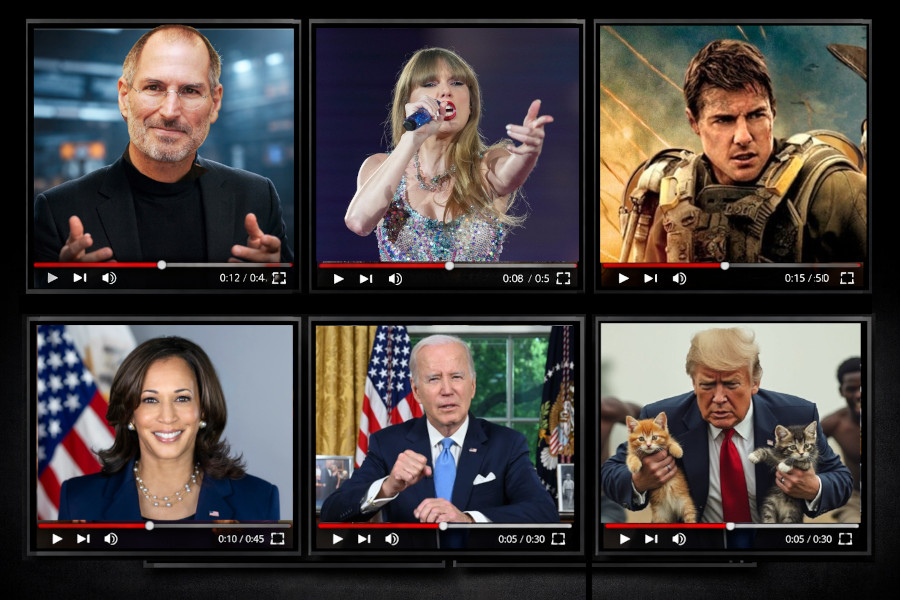
If you’ve seen tools like Kling generating videos that look suspiciously like real celebrities, you’ve probably asked the same question many people are starting to ask:
How are they allowed to do that?
Why aren’t these platforms getting shut down?
The answer is surprisingly simple – and incredibly important.
They’re not breaking the law.
They’re operating inside a legal gap that is rapidly closing.
And when that gap closes, the future of AI identity will look very different.
The Current Reality: Tools Are Not the Same as Usage
Right now, most AI video and image platforms operate under a familiar legal framework:
We provide the tool.
The user is responsible for how it’s used.
This is the same principle that allows Photoshop to exist even though someone could misuse it.
Most platforms – Kling included – explicitly prohibit:
- Impersonation
- Deception
- Commercial misuse of real individuals
- Unauthorized representation of real people
In other words:
The platform is neutral.
The user carries the liability.
That distinction is the only reason celebrity-like outputs are still being generated today.
The Core Legal Issue: Likeness Is Not Copyright
Here’s where things get interesting.
Celebrity faces, voices, and personas are not primarily protected by copyright.
They fall under something else:
👉 Name, Image, and Likeness (NIL)
NIL protects what makes a person recognizable:
- Their face
- Their voice
- Their identity
- Their persona
And using NIL without permission – especially for commercial purposes – is often illegal.
Courts have upheld this before.
In one well known case, a singer successfully sued Ford Motor Company for using a sound-alike voice in an advertisement.
The message was clear:
You don’t have to copy someone exactly.
If it’s recognizable, it can still violate their rights.
Enforcement Today Is Reactive
Right now, the system works like this:
Platforms don’t have to pre-block everything.
Instead:
- A celebrity or their representative files a complaint
- The content gets removed
- Legal action may follow
This is similar to how copyright takedowns work today.
But policymakers are rapidly moving toward something stronger.
The Shift Is Already Underway
New legislation is emerging that directly addresses AI-generated likeness.
The NO FAKES Act
Backed by leaders across entertainment and technology, the proposed NO FAKES Act would:
- Define AI generated “digital replicas”
- Grant individuals exclusive rights to them
- Require consent for commercial use
Importantly:
It also creates a safe harbor for compliant platforms acting in good faith.
Supporters of this legislation include:
- SAG-AFTRA
- Recording Industry Association of America (RIAA)
- Motion Picture Association (MPA)
Their message is simple:
Consent must become the default.
The ELVIS Act
Tennessee has already taken a step in this direction with the ELVIS Act, which protects voice likeness in the age of AI.
The intent is clear:
AI identity is becoming regulated identity.
The Window Is Closing
Today’s AI environment still reflects a “generate first, remove later” model.
But legislation is moving us toward:
License first, generate later
That is the inevitable direction of the market.
Studios, talent agencies, and unions are already adapting.
Even individuals are acting preemptively – Matthew McConaughey recently trademarked his own identity to protect against AI misuse.
This is no longer theoretical.
It is happening.
What Happens Next?
When laws like the NO FAKES Act pass, AI platforms will face a new reality:
Generating likeness without permission will no longer live in a gray zone.
It will require:
- Consent
- Attribution
- Licensing
And that creates a massive shift in infrastructure needs.
Because suddenly, the question becomes:
How do you legally use identity inside AI?
Where BridgeBrain Fits
BridgeBrain was built for exactly this future.
Not to stop AI creation – but to enable it legally.
Instead of:
Generate now and worry later
BridgeBrain enables:
License first, create freely
Through the Persona Licensing Framework (PLF), BridgeBrain provides:
- Permission layers
- Attribution tracking
- Licensed identity usage
- Commercial compliance pathways
In a world moving toward regulated AI likeness, BridgeBrain becomes the safe harbor.
Not a restriction.
An unlock.
The Direction Is Clear
AI is not going to stop generating human likeness.
But the era of unlicensed identity is ending.
And the next phase of AI innovation will belong to platforms that:
Respect consent
Enable creativity
Protect identity
Support monetization
That is the future.
And it’s exactly the world BridgeBrain was designed for.