Ready Licensing for AI, Talent, Likeness, and IP
BridgeBrain has reached an important milestone. We want to recognize Lumovex Studios for helping is in the integration and design for enterprise standards in professional studio productions.
With the release of BridgeBrain 2.4 Enterprise, the platform has been hardened for professional studio, production, talent, and enterprise licensing workflows — including the kinds of requirements expected in California entertainment, media, AI, and digital production environments.
This update moves BridgeBrain beyond a licensing concept and into a more production-ready framework for managing how a person’s likeness, creative identity, intellectual property, digital persona, and AI-enabled usage rights can be licensed, tracked, verified, and enforced across connected tools and partner systems.
The Short Version
BridgeBrain 2.4 Enterprise strengthens the platform around five major pillars:
- Binding license acceptance
- Studio-grade audit trails
- Talent verification and privacy controls
- Enterprise-ready licensing evidence
- SDK and platform-level rights propagation
In plain English: BridgeBrain now gives creators, talent, studios, and AI production partners a stronger way to prove who agreed to what, when they agreed, what rights were granted, what restrictions apply, and how those rights travel into downstream AI tools and licensed workflows.
That matters because AI production is no longer theoretical. Real people, real likenesses, real voices, real creative brands, and real intellectual property are entering AI-powered content pipelines. BridgeBrain exists to make that process consent-based, trackable, licensable, and commercially usable.
Why This Release Matters
The entertainment and AI industries are moving quickly, but the legal and operational infrastructure has been lagging behind.
Studios want speed. Talent wants protection. Creators want attribution and compensation. Developers want clear usage permissions. Investors and enterprise partners want evidence, not handshakes.
BridgeBrain 2.4 Enterprise was built for that world.
This release hardens the platform so BridgeBrain can better support professional licensing scenarios involving:
- Talent likeness and persona licensing
- AI-generated video, voice, image, and character use
- Studio and production partner workflows
- Digital doubles and AI-assisted media creation
- Creator-owned IP licensing
- Brand and character licensing
- Rights-aware AI tools and applications
- Marketplace-driven licensing relationships
- Verified consent and entitlement records
BridgeBrain’s core belief remains simple: AI should not erase ownership, consent, attribution, or compensation. It should make those things more programmable, more transparent, and easier to honor.
From Beta Framework to Enterprise-Ready Infrastructure
Earlier versions of BridgeBrain proved the model: creators and talent could define persona rights, publish licensing terms, grant access, and allow approved usage across connected systems.
BridgeBrain 2.4 Enterprise takes the next step.
The platform has now been bulletproofed around the kinds of questions professional partners actually ask:
- Is the license acceptance clear?
- Can we prove the user agreed?
- Are terms versioned and preserved?
- Is there an audit trail?
- Are admin overrides logged?
- Can evidence be exported?
- Are verification documents handled responsibly?
- Can usage constraints travel with the licensed persona?
- Can partner tools read the license state?
- Is this ready for more serious production workflows?
This release was designed to answer those questions with software, not just policy language.
Binding License Workflows
BridgeBrain 2.4 Enterprise strengthens the license acceptance process with clearer, more formal agreement language across acquisition flows.
Licensees are now presented with binding license terms tied to the specific persona, likeness, IP, field of use, pricing model, restrictions, attribution rules, and usage constraints being granted.
This is important because AI licensing cannot rely on vague consent. If a person, brand, estate, performer, producer, or creator grants permission for AI usage, the platform needs to preserve what was granted and under what terms.
BridgeBrain now does that with a stronger enterprise-grade acceptance model.
Stronger Proof and Audit Trails
This release adds a much stronger evidence layer behind the scenes.
BridgeBrain can now capture and preserve the core details needed to support a professional license record, including acceptance timing, terms version, license scope, entitlement status, acquisition flow, admin actions, and related event history.
For studios and enterprise partners, this means BridgeBrain is not just a “click to license” tool. It is an evidence-aware licensing system designed to support real-world review, diligence, dispute prevention, and partner accountability.
Admin Controls and Override Accountability
Professional systems need admin tools. They also need accountability.
BridgeBrain 2.4 Enterprise strengthens admin and bypass workflows so manual actions are no longer invisible. When administrative access is granted, bypassed, adjusted, or overridden, those actions can now be captured with reason codes, actor identity, affected records, and before/after state.
That is essential for studio, production, talent, and institutional environments where exceptions sometimes happen — but undocumented exceptions create risk.
BridgeBrain’s approach is simple: if the platform allows a meaningful manual action, that action should be traceable.
Talent Verification and Privacy Readiness
BridgeBrain 2.4 Enterprise also strengthens the talent verification side of the platform.
As AI production moves deeper into likeness, voice, and digital persona usage, verification becomes critical. But verification must also be handled carefully. Talent identity materials and verification files require thoughtful retention, deletion, access, and proof controls.
This release adds stronger support for verification proof records, retention handling, deletion workflows, purge controls, and privacy-aware operational practices.
That matters especially for California-facing productions, where talent, privacy, and likeness issues carry heightened expectations.
Rights That Travel
One of BridgeBrain’s most important goals is not just to store license terms in a dashboard, but to help licensing information travel into the systems that actually use the licensed persona.
BridgeBrain 2.4 Enterprise extends the licensing evidence model toward the BridgeBrain SDK and connected platform workflows. This allows downstream tools to receive clearer information about the license state, accepted terms, usage constraints, and entitlement context.
That is the larger vision: a rights-aware AI ecosystem where tools do not have to guess whether something is allowed. They can check, verify, and respect the license.
Built for AI Production, Not Just Static IP Licensing
Traditional IP licensing was built for a slower world: contracts, PDFs, emails, spreadsheets, legal departments, and manual review.
AI production needs something more dynamic.
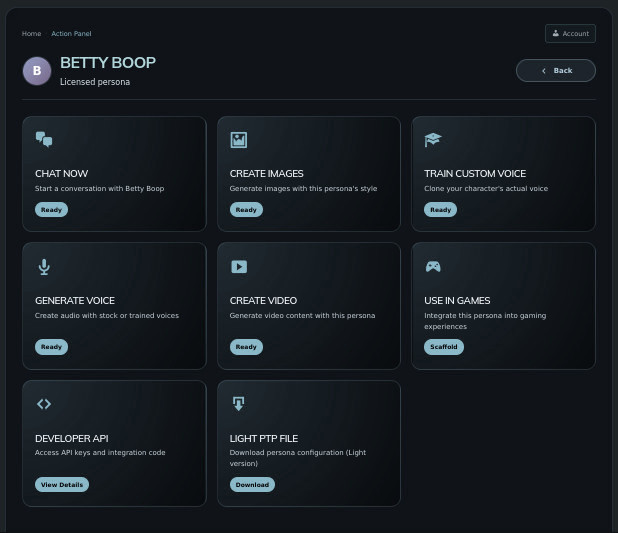
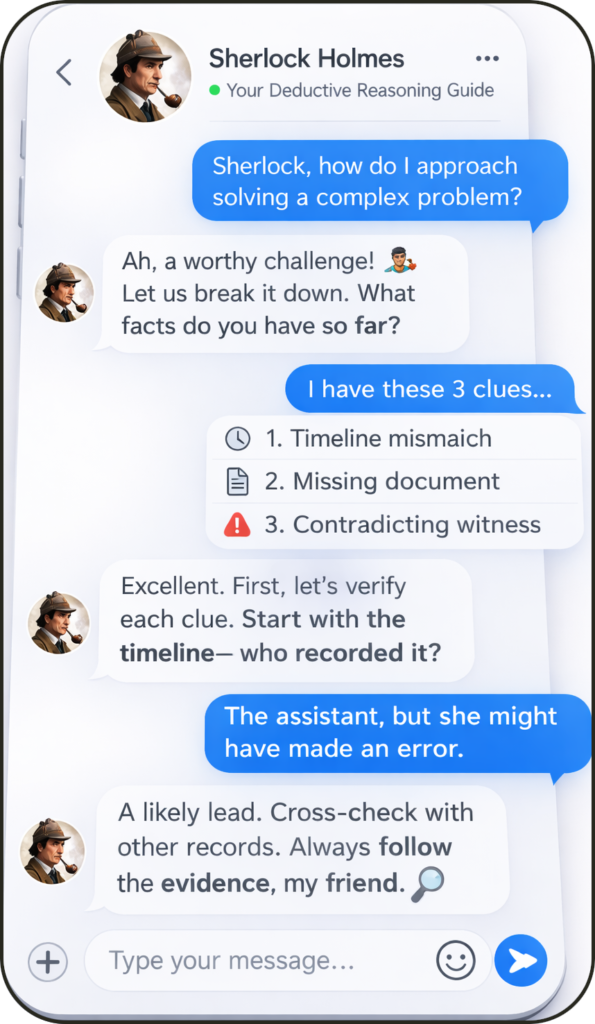
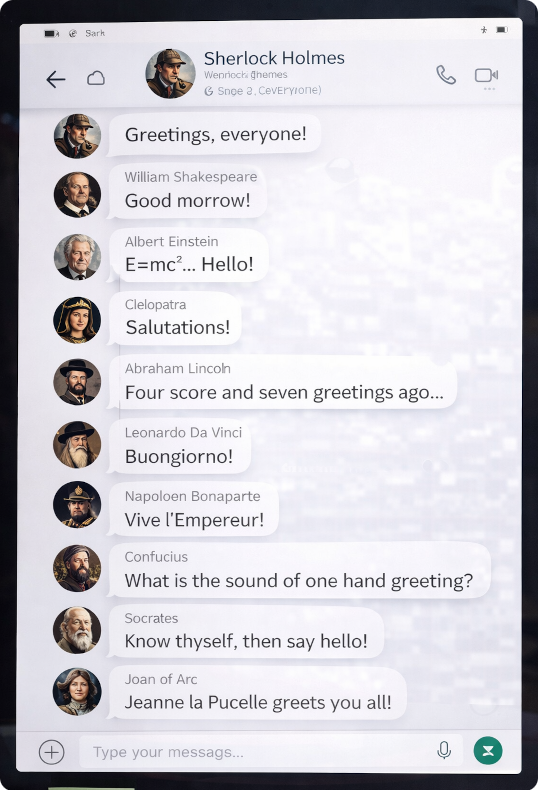
A licensed persona may be used in a chat agent, video tool, game engine, voice generator, image workflow, training environment, branded experience, or production pipeline. Each use case may carry different permissions and restrictions.
BridgeBrain is being built for that multi-tool, multi-platform reality.
The 2.4 Enterprise release strengthens the foundation for:
- AI video production
- Game and interactive media workflows
- Licensed digital characters
- Performer likeness usage
- Voice and image generation permissions
- Creator-controlled AI personas
- Brand-safe AI deployment
- Studio and partner integrations
- Rights-aware SDK/API usage
This is not just about licensing content. It is about licensing identity, likeness, persona, and creative rights for the AI era.
Why BridgeBrain Matters Now
AI is rapidly lowering the cost of production. That is exciting, but it also creates a rights problem.
If anyone can generate realistic people, voices, characters, brands, and worlds, then consent and licensing infrastructure becomes more important, not less.
BridgeBrain is built around a different assumption: the future of AI media should not be a free-for-all. It should be a programmable licensing economy where people and rights-holders can participate, authorize, restrict, monetize, and revoke usage according to clear rules.
BridgeBrain 2.4 Enterprise moves us closer to that future.
What This Means for Partners
For production partners, BridgeBrain now provides a stronger licensing backbone for AI-enabled workflows.
For talent and creators, it provides a more serious consent and protection layer.
For developers, it offers a clearer rights framework to build against.
For studios, agencies, and enterprise partners, it provides a stronger path toward production-grade AI licensing, verification, entitlement tracking, and downstream rights enforcement.
And for BridgeBrain, this release marks a major step from early platform validation toward enterprise readiness.
Looking Ahead
BridgeBrain 2.4 Enterprise is not the finish line. It is the foundation for the next layer of adoption.
The next phase is about live production testing, partner integrations, studio workflows, SDK expansion, marketplace refinement, and real-world licensing use cases across AI media, games, entertainment, education, brand experiences, and creator-driven platforms.
The goal is clear:
Make AI licensing real.
Make consent programmable.
Make likeness and IP usage trackable.
Make talent participation commercially viable.
Make AI production safer, faster, and more professional.
BridgeBrain 2.4 Enterprise is our strongest step yet in that direction.