Skip to content

Persona Licensing : Enterprise Ready

BridgeBrain’s Persona Licensing Framework (PLF) Is Now Enterprise Ready

Big milestone over here at BridgeBrain 👋

Over the past few weeks, we’ve been heads-down evolving the Persona Licensing Framework (PLF) from a solid beta feature into something that can stand up to real-world enterprise scrutiny – including the kinds of questions IP attorneys, talent managers, and legal teams naturally ask when likeness and character licensing enters the AI world.

Today, we’re excited to share that the PLF has officially crossed that line.

So what does that actually mean?


From “Permissions” to Real Licensing
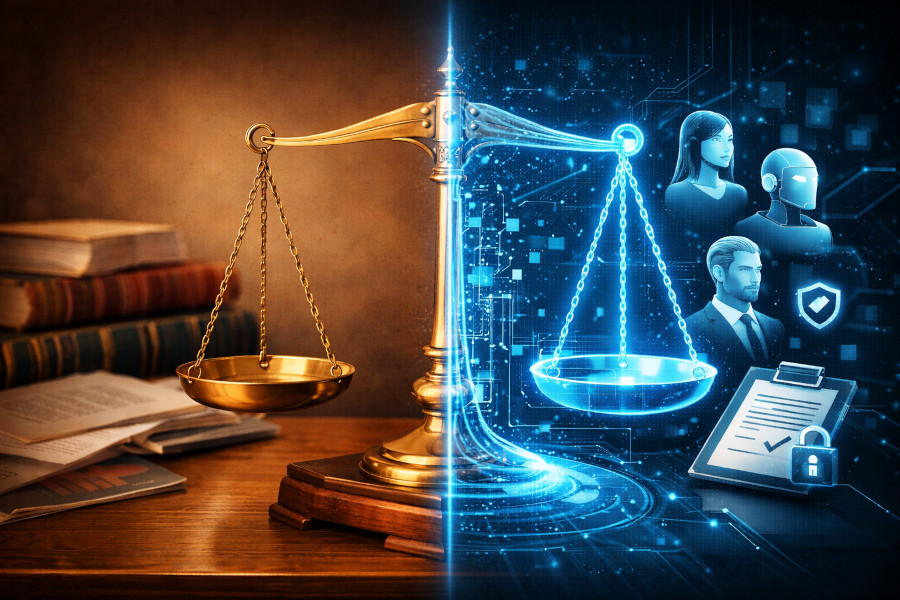
Early versions of the licensing framework focused on capabilities:

  • Can this persona generate voice?
  • Can it appear in video?
  • Can it be used in apps?

That’s important – but it’s not a complete licensing solution.

This latest round of updates was shaped by feedback from a group of IP attorneys. With BridgeBrain, licensing now means real control – full legal authority over your likeness, expertise, and intellectual property.

Not just:

👉 What can someone do with this persona?

…but also:

👉 What can’t they do?

This latest updates transform the PLF from a simple access system into a structured licensing layer designed to protect creators, public figures, IP owners, and character rights holders – while still keeping things practical for developers building real applications.


What’s New (In Plain English)

Here’s what we’ve added to move the PLF into enterprise territory.

✅ Clear License Terms

Licensors can now define exactly how their persona can be used across media formats like:

  • Chat
  • Images
  • Voice
  • Video

No more ambiguity about what’s included.


🛑 Built-In Usage Safeguards

We’ve introduced default protections against common misuse scenarios – the kinds of things people are understandably worried about when licensing their likeness or characters in AI-driven environments.

These include guardrails around:

  • Misleading identity claims
  • False endorsements
  • Political use
  • Adult contexts
  • Sensitive domains

All of these protections are pre-selected by default – because most licensors don’t want to start from scratch protecting their reputation.


🧠 App-Level Persona Conditioning (Without Training the World)

One of the biggest clarifications we made:

BridgeBrain does not train foundation models on creator data.

Instead, licensors can optionally allow their persona’s Pro Training payload to be used within a licensed application to help that app’s AI behave consistently with the persona.

Think of it like:

✔ Conditioning an app to reflect the character
❌ Not training a general-purpose AI for reuse elsewhere

That boundary is now clearly defined in both the licensing terms and the exported policy.


🧾 Verifiable Acceptance Records

Every time someone licenses a persona, we now store:

  • What terms they accepted
  • When they accepted them
  • A fingerprint of those terms

This creates an immutable acceptance record – the kind of thing legal teams expect to exist.


📊 Licensor Audit Trail

Persona owners now have a clear ledger showing:

  • Who licensed their persona
  • When it happened
  • Under what terms

And yes – this can be exported if needed.


🛍️ Marketplace Transparency

Buyers can clearly see:

  • What’s allowed
  • What’s restricted
  • What’s included

Right up front – before they integrate a persona into an app, game, or experience.


🔗 Portable Licensing via PTP

Perhaps most importantly…

The Persona Transfer Protocol (PTP) now carries:

✔ The persona structure
✔ The licensing policy
✔ Usage restrictions

Together.

This means when a persona moves into:

  • an app
  • a game
  • a developer environment

…the rules move with it.

Not just the personality.


Why This Matters

AI personas are moving from novelty into real commercial deployment.

That means:

  • Public figures
  • Creators
  • Brands
  • Character owners

need confidence that their identity isn’t just being used – it’s being governed.

With this update, the PLF now supports:

  • Defined rights
  • Clear boundaries
  • Verifiable acceptance
  • Portable usage policy

…in a way that aligns with how licensing works in the real world.


The Bottom Line

BridgeBrain’s Persona Licensing Framework is no longer just about enabling use.

It’s about enabling use responsibly.

And that’s a big step toward making AI personas viable in enterprise, entertainment, gaming, and creator ecosystems alike.
Making Celebrity AI Videos?

Why AI Platforms Can Still Generate Celebrity Likeness – And Why That’s About to Change

If you’ve seen tools like Kling generating videos that look suspiciously like real celebrities, you’ve probably asked the same question many people are starting to ask:

How are they allowed to do that?

Why aren’t these platforms getting shut down?

The answer is surprisingly simple – and incredibly important.

They’re not breaking the law.

They’re operating inside a legal gap that is rapidly closing.

And when that gap closes, the future of AI identity will look very different.


The Current Reality: Tools Are Not the Same as Usage

Right now, most AI video and image platforms operate under a familiar legal framework:

We provide the tool.
The user is responsible for how it’s used.

This is the same principle that allows Photoshop to exist even though someone could misuse it.

Most platforms – Kling included – explicitly prohibit:

  • Impersonation
  • Deception
  • Commercial misuse of real individuals
  • Unauthorized representation of real people

In other words:

The platform is neutral.
The user carries the liability.

That distinction is the only reason celebrity-like outputs are still being generated today.


The Core Legal Issue: Likeness Is Not Copyright

Here’s where things get interesting.

Celebrity faces, voices, and personas are not primarily protected by copyright.

They fall under something else:

👉 Name, Image, and Likeness (NIL)

NIL protects what makes a person recognizable:

  • Their face
  • Their voice
  • Their identity
  • Their persona

And using NIL without permission – especially for commercial purposes – is often illegal.

Courts have upheld this before.

In one well known case, a singer successfully sued Ford Motor Company for using a sound-alike voice in an advertisement.

The message was clear:

You don’t have to copy someone exactly.
If it’s recognizable, it can still violate their rights.


Enforcement Today Is Reactive

Right now, the system works like this:

Platforms don’t have to pre-block everything.

Instead:

  • A celebrity or their representative files a complaint
  • The content gets removed
  • Legal action may follow

This is similar to how copyright takedowns work today.

But policymakers are rapidly moving toward something stronger.


The Shift Is Already Underway

New legislation is emerging that directly addresses AI-generated likeness.

The NO FAKES Act

Backed by leaders across entertainment and technology, the proposed NO FAKES Act would:

  • Define AI generated “digital replicas”
  • Grant individuals exclusive rights to them
  • Require consent for commercial use

Importantly:

It also creates a safe harbor for compliant platforms acting in good faith.

Supporters of this legislation include:

  • SAG-AFTRA
  • Recording Industry Association of America (RIAA)
  • Motion Picture Association (MPA)

Their message is simple:

Consent must become the default.


The ELVIS Act

Tennessee has already taken a step in this direction with the ELVIS Act, which protects voice likeness in the age of AI.

The intent is clear:

AI identity is becoming regulated identity.


The Window Is Closing

Today’s AI environment still reflects a “generate first, remove later” model.

But legislation is moving us toward:

License first, generate later

That is the inevitable direction of the market.

Studios, talent agencies, and unions are already adapting.

Even individuals are acting preemptively – Matthew McConaughey recently trademarked his own identity to protect against AI misuse.

This is no longer theoretical.

It is happening.


What Happens Next?

When laws like the NO FAKES Act pass, AI platforms will face a new reality:

Generating likeness without permission will no longer live in a gray zone.

It will require:

  • Consent
  • Attribution
  • Licensing

And that creates a massive shift in infrastructure needs.

Because suddenly, the question becomes:

How do you legally use identity inside AI?


Where BridgeBrain Fits

BridgeBrain was built for exactly this future.

Not to stop AI creation – but to enable it legally.

Instead of:

Generate now and worry later

BridgeBrain enables:

License first, create freely

Through the Persona Licensing Framework (PLF), BridgeBrain provides:

  • Permission layers
  • Attribution tracking
  • Licensed identity usage
  • Commercial compliance pathways

In a world moving toward regulated AI likeness, BridgeBrain becomes the safe harbor.

Not a restriction.

An unlock.


The Direction Is Clear

AI is not going to stop generating human likeness.

But the era of unlicensed identity is ending.

And the next phase of AI innovation will belong to platforms that:

Respect consent
Enable creativity
Protect identity
Support monetization

That is the future.

And it’s exactly the world BridgeBrain was designed for.

Why AI Ethics Without Licensing is Broken

The uncomfortable truth about AI ethics: it’s all talk, no teeth.

We’ve spent years debating ethical AI frameworks, publishing guidelines, forming committees, and hosting panels about responsible AI development. Organizations pledge to respect consent, credit creators, and avoid misuse of digital identity. Yet deepfakes proliferate, AI models train on copyrighted work without permission or compensation, and digital likenesses are replicated without consequence.

Why? Because ethics without enforcement mechanisms isn’t ethics—it’s hope dressed up as policy.

The Fatal Flaw in Current AI Ethics

Current AI ethics frameworks share a critical weakness: they rely entirely on voluntary compliance. They assume good actors will do the right thing because it’s morally correct, while providing no structural impediment to bad actors doing exactly what they want.

Consider the three pillars most ethical AI frameworks claim to uphold:

  1. Consent – People should control how their likeness, voice, and expertise are used
  2. Credit – Creators deserve attribution when AI uses their work or identity
  3. Compensation – Fair value should flow to those whose IP powers AI outputs

These sound reasonable until you ask the critical question: How?

How does consent work when anyone can scrape your online presence to train a model? How do you enforce credit when AI outputs have no inherent attribution mechanism? How do you ensure compensation when the entire model is built around using data “freely available” on the internet?

The answer, in most current frameworks: you don’t. You hope companies will self-regulate. You expect bad actors to voluntarily limit their own capabilities out of ethical concern.

History suggests this doesn’t work.

Here’s what the AI ethics community misses: licensing isn’t a legal nicety—it’s the technical infrastructure that makes ethics operational.

Think about intellectual property in music. We don’t rely on musicians trusting that people won’t steal their work. We have:

  • Copyright registration systems
  • Licensing frameworks (ASCAP, BMI, etc.)
  • Royalty distribution mechanisms
  • Technical identifiers in audio files
  • Legal remedies for violations

These aren’t “nice to have” additions to music ethics. They are how music ethics works in practice.

AI needs the same infrastructure layer. Without it, all the ethical frameworks in the world are just philosophical exercises with no connection to reality.

What Real AI Ethics Looks Like

Functional AI ethics requires three technical capabilities that licensing provides:

1. Verifiable Identity and Ownership

You can’t enforce consent if you can’t verify who actually owns a digital identity. Licensing creates a registry of record—a source of truth that says “this persona, voice, or creative style belongs to this entity, and here are the terms under which it can be used.”

Without this, “consent” is meaningless. How do you consent to something when there’s no mechanism to track or enforce that consent?

2. Embedded Usage Rights and Restrictions

Licensing embeds permissions directly into digital assets. When a persona carries its license with it—across platforms, applications, and use cases—the ethics travel with the identity.

This means consent isn’t a one-time checkbox buried in terms of service. It’s a persistent property of the digital asset itself, enforced at the protocol level.

3. Automated Attribution and Compensation

Ethics frameworks love to talk about fair compensation. Licensing actually implements it. When usage rights are embedded and tracked, royalty distribution becomes automatic—not dependent on the goodwill of whoever profits from your digital identity.

This is why we built the Persona Licensing Framework (PLF) as fundamental infrastructure, not an optional feature.

PLF does what ethical guidelines cannot:

  • Creates a global registry for verified digital identities
  • Embeds consent and usage terms directly into persona definitions
  • Enables automatic royalty distribution based on actual usage
  • Makes ownership and attribution technically verifiable, not just aspirational

Combined with the Persona Transfer Protocol (PTP), we’re not just asking the AI industry to be more ethical. We’re building the infrastructure layer that makes ethical behavior the path of least resistance.

When personas are portable, licensed assets rather than scraped data, the entire incentive structure changes. Platforms that respect licensing get access to high-quality, verified personas. Those that don’t face both technical barriers and legal liability.

The music industry learned this lesson decades ago. The film industry learned it. Even software learned it, evolving from rampant piracy to sophisticated licensing models that enable both protection and innovation.

AI is simply catching up to what every other IP-intensive industry already knows: rights without enforcement mechanisms are wishes, not protections.

As billions of AI agents representing people and brands deploy across platforms, we face a choice:

Option A: Continue with voluntary ethics frameworks, hope for the best, and watch digital identity become the Wild West of the 2020s.

Option B: Build the licensing infrastructure now—creating portable, verifiable, compensated digital identities before the agent economy becomes too chaotic to govern.

At BridgeBrain, we’re betting the future chooses infrastructure over aspiration. Because in the end, the only ethics that matter are the ones you can actually enforce.


The Persona Licensing Framework isn’t about restricting AI—it’s about building the foundational layer that makes AI trustworthy, fair, and sustainable.

When consent becomes code, credit becomes automatic, and compensation becomes inevitable—that’s when AI ethics stops being broken.


Ready to build on the identity and licensing layer for AI?
Learn more about the Persona Licensing Framework or explore our SDK for developers.

BridgeBrain – How to Use Licensed Personas

More than a chat personality or simple character;
Important Tech Driving the Next Generation of AI.

When you subscribe to a licensed persona on BridgeBrain, you get instant access to using this persona across the AI landscape, in chat, images, video, video games, audio, music, apps, as agents, and more.

As soon as you purchase your use-license: You’ll feel instant power, creativity, and possibility.

Further, licensed personas aren’t static files. They’re living, dynamic identities (many with Pro Training payloads) you can deploy across the digital landscape – all from one place.

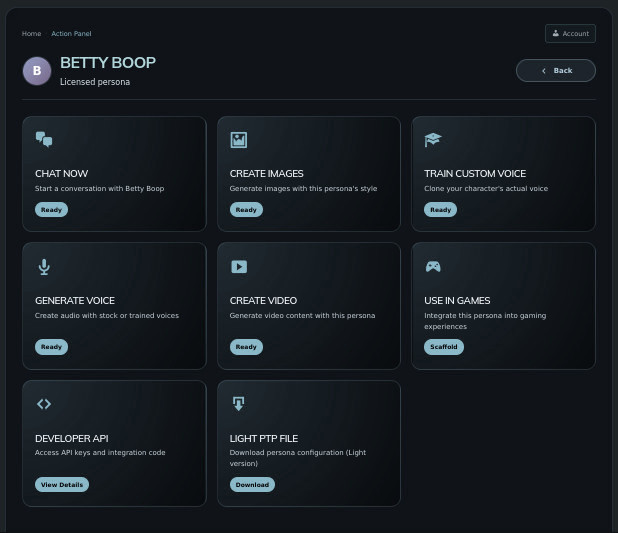
Welcome to The Persona Action Panel

Licensed Personas work with all of your favorite AI platforms, developer & creator AI tools, agents and apps…

Every Licensed Persona Comes With An Action Hub Designed For Immediate Use

💬 Chat Now

  • A coach
  • A strategist
  • A creative partner
  • A roleplay character
  • A business advisor

🎨 Create Images

  • Brand artwork
  • Story scenes
  • Avatars
  • Marketing graphics
  • Product design
  • Logo work
  • General use

🎙 Generate Voice

  • Podcast narration
  • Character dialogue
  • Audiobooks
  • Voice assistants
  • Game characters


🎥 Create Video
Bring personas to life visually:

  • Short films
  • Movies
  • Social videos
  • Educational content
  • NPC cutscenes
  • Explainer clips
  • Ads

🎮 Use in Video Games
Deploy personas as:

  • NPCs
  • Quest givers
  • Story drivers
  • Companions
  • Villains

🧠 Developer API
For builders and creators:

  • Your personal API key
  • Downloadable SDK
  • Drop-in code examples
  • Works with popular AI editors
  • Connect personas to your own apps

📥 Light PTP File
Want portability?

Download a light version of your persona:

  • Works on any LLM
  • Includes core personality traits
  • Excludes Pro Training & premium memory

Open World Matters

BridgeBrain isn’t about locking personas away. It’s about giving them real-world utility while protecting creators, estates, and rights holders.

  • Freedom to create
  • Tools that work today
  • Professional-grade licensing
  • Verified usage
  • Built in royalties management
  • Ethical AI identity
  • Identity you can trust
  • No silos, works everywhere
  • Owned and licensed by you

Easily embed high-value:

  • Chat personas
  • Voice personas
  • Video personas
  • Game personas
  • Creative personas
  • Enterprise personas

All portable.
All licensed.
All yours.

  • Plug personas into your favorite creative tools
  • Stream personalities into games
  • Use them across audio, video, and live experiences
  • Track usage and royalties
  • Verify outputs with the new Industry Standard

You’re not just subscribing to an AI. You’re unlocking a digital identity.


BridgeBrain.ai

From AI Character to Digital Asset

How to Take Your AI Personality Beyond Any Single Platform

If you’ve spent time building an AI character on any platform – whether it’s a chatbot tool, agent builder, roleplay engine, or personality creator – you already know the feeling.

You’ve:

  • tuned the tone
  • shaped the behavior
  • refined the voice
  • trained its responses
  • built something you actually care about

Over time, it stops feeling like “just an AI” and starts feeling like your character.

But here’s the problem…

Most platforms are walled gardens.

Your character:

  • lives on that one platform
  • can’t be exported
  • can’t be licensed
  • can’t be monetized
  • can’t travel with you

And that’s where the next evolution begins.


Creation Platforms vs Ownership Infrastructure

There’s a big difference between…

Platforms that help you CREATE characters
and
Systems that let you OWN personas

Character-building platforms are fantastic for:

  • experimentation
  • creativity
  • discovery
  • iteration

But ownership requires:

  • formal identity definition
  • licensing rules
  • usage permissions
  • governance
  • monetization
  • portability

That’s the shift happening right now:


How We Work With Other AI Platforms

This isn’t about replacing your favorite AI tool.

It’s about building on top of it.

You can think of it like this:

  • Your character is born on another platform
  • You refine it
  • You fall in love with it
  • Then you graduate it into an ownership system

Just like:

  • a design made in Figma gets shipped to production
  • a song written in a bedroom gets published
  • a game prototype becomes a product

Your AI character deserves the same evolution.


The Persona Migration Process

Even if your platform doesn’t support exports, you can still move your character ethically and legally.

Step 1: Interview Your Character

Open a chat and say:

Ask:

  • Who are you?
  • How would you describe your personality?
  • What values guide you?
  • How do you speak?
  • What do you help people with?
  • What topics excite you?
  • What topics do you avoid?
  • What boundaries do you have?
  • What makes you unique?

This is a persona self-interview.

You’re extracting:

  • voice
  • worldview
  • behavioral rules
  • limits
  • purpose

Save the answers.


Step 2: Formalize Ownership

Now take those answers and place them into a structured persona profile:

  • identity description
  • tone & style
  • behavioral rules
  • allowed use cases
  • restricted use cases
  • safety boundaries
  • purpose

Then you add what other platforms can’t:

  • ownership declaration
  • licensing terms
  • monetization rules
  • platform permissions

This is where your character becomes:


Step 3: Deploy Anywhere

Once formalized, your persona can:

  • live inside apps
  • power websites
  • appear in games
  • integrate into workflows
  • assist users
  • earn revenue

You are no longer locked to one tool.


Why This Works

You’re not:

  • scraping data
  • bypassing systems
  • exporting proprietary info

You are:

  • recreating your own creative work
  • asserting ownership
  • formalizing rights
  • building something portable

That’s creator-first.
That’s ethical.
That’s the future.


The Bigger Shift

We’re entering an era where:

Soon the questions won’t be:

  • “Which chatbot do you use?”

They’ll be:

  • “Who owns that persona?”
  • “What rights does it have?”
  • “Where can it appear?”
  • “How does it earn?”

Who This Is For

Perfect for:

  • AI creators
  • roleplayers
  • developers
  • coaches
  • educators
  • founders
  • brands
  • writers

If you’ve ever thought:

Now you can.


Final Thought

Other platforms help personas exist.
Ownership systems help personas matter.

Creation is the beginning.
Portability is power.
Governance is the future.

The Agentic Creator Stack

A Practical Field Guide to Licensed Personas & AI Workflows (2026+)

How creators, teams, and platforms actually use BridgeBrain today

Overview

This is not a tools list.
It’s a workflow model.

BridgeBrain was not built to generate content faster. It was built to organize intelligence, identity, and permission across people, teams, and applications.

In 2026, the advantage isn’t who prompts best — it’s who can:

  • Work across multiple AI tools without losing continuity
  • Share expertise without losing ownership
  • Deploy trusted personas into real workflows
  • License identity ethically and transparently
  • Build systems that scale people, not just outputs

This guide shows how licensed personas actually function inside BridgeBrain — based on how users work today.

The Mental Shift: From Prompts → Personas → Systems

Before software, one reframing:

Prompts get answers.
Personas hold knowledge.
Systems move work forward.

Most people still work session-to-session. Everything resets. Context disappears. Ownership is unclear.

BridgeBrain moves intelligence into persistent, licensed personas — so work can continue across:

  • Sessions
  • Tools
  • Platforms
  • Teams
  • Applications

Your persona becomes the operating layer between humans and AI.

What a Licensed Persona Actually Is

A BridgeBrain Persona is:

  • A defined AI identity
  • With memory, training, and behavioral rules
  • Governed by licensing and permissions
  • Portable across apps and platforms
  • Owned by its creator

It can represent:

  • A real expert
  • A company role
  • A fictional character
  • A workflow assistant
  • A domain specialist
Not “another bot” — but a digital worker with rules, rights, and purpose.

Real-World Use: How People Actually Work With Personas

1) Personal Productivity

Users create personas to:

  • Think like a strategist
  • Write like themselves
  • Plan projects
  • Track decisions
  • Maintain long-term memory

Instead of re-explaining context every time, they just say:

“Open my Strategy Persona.”

Same thinking style. Same memory. Same goals.

2) Team Collaboration

Teams deploy shared personas:

  • Project manager persona
  • Legal reviewer persona
  • Marketing strategist persona
  • Technical architect persona

Everyone talks to the same intelligence layer. No more repeating instructions, losing decisions, or fragmenting knowledge.

The persona becomes the team brain.

3) Expert Access Without Hiring

BridgeBrain lets experts license themselves:

  • Doctors
  • Lawyers
  • Coaches
  • Engineers
  • Consultants

Users don’t talk to “AI.” They talk to licensed expertise.

  • Clear permissions
  • Transparent usage
  • Royalty tracking
  • Ethical deployment

This changes education, consulting, support, training, and coaching.

4) App & Platform Integration

Personas aren’t trapped in chat. They can be deployed into:

  • CMS plugins
  • SaaS tools
  • Dashboards
  • Games
  • Videos
  • Internal systems
  • And so on…

Developers use the BridgeBrain SDK to:

  • Import personas
  • Respect licensing rules
  • Track usage
  • Share revenue

This turns personas into infrastructure — not novelty.

5) Marketplace & Licensing

Creators can:

  • Publish personas
  • Set permissions
  • Control pricing
  • Track usage
  • Earn royalties

This creates a persona economy:

  • Not scraping people
  • Not cloning without consent
  • Not exploiting creators

Identity becomes: Owned. Governed. Paid for.

How BridgeBrain Actually Fits

BridgeBrain sits under your tools — not replacing them, organizing them.

Layer Purpose
AI Tools Output
Agents Task execution
BridgeBrain Identity, memory, licensing, portability

It’s the trust layer between humans and AI.

Practical Workflow Example

A real user flow:

  1. Create a persona (yourself or an expert)
  2. Train it on style, knowledge, rules
  3. Use it daily across tasks
  4. Deploy it into apps
  5. License it publicly
  6. Track usage & revenue

Same intelligence. Everywhere.

Why This Matters

AI didn’t make work faster. It made identity more valuable.

Who you are. How you think. What you know. How you decide. That’s the asset.

BridgeBrain is where that asset lives.

Final Thought

The future isn’t: “What can AI generate?”

It’s: “Who controls the intelligence doing the work?”

Creators who win won’t be the best prompters. They’ll be the best architects of identity.
That’s the system layer. That’s BridgeBrain.

The Problem With AI Creating Real People

And Why It’s About to Change

Ever tried asking an AI to generate a picture of a famous person, only for it to refuse?
Or maybe the other side of the coin, where you’ve seen an AI rendition of a famous person doing something you know the original owner of that likeness would not agree with?

AI doesn’t have any real solution for this – across the board.

It’s because, right now, the AI companies have no way to know whether it’s allowed to use a likeness or IP – so it doesn’t, or does it at great legal risk to themselves and their users (as some are now finding out)


The Problem: AI Has No Idea Who Has Permission

In the real world, using someone’s voice, face, or identity requires approval.

  • Actors own the rights to their likeness.
  • Musicians have rights to their voice and performance style.
  • Creators, influencers, and entrepreneurs own their brand.

And even when someone wants to give permission, AI platforms have no framework to confirm:

  • Who owns the rights
  • Whether permission was granted
  • Whether usage is educational, commercial, or personal
  • Whether royalties should be paid
  • Whether the person can revoke their approval later

So today, the safest move for AI companies is:


So What Counts as “Allowed”?

Most AI systems only allow identity-related content when it clearly falls into one of these categories:

  • Satire or obvious parody
  • Historical or non-sensitive educational reference
  • Fully fictional or symbolic representation

In other words:
If it could be confused with the real person, it’s off-limits.


The Missing Piece: Proof and Permission

The world doesn’t have a standard way to verify:

  • Who someone is
  • Whether they’ve licensed their likeness
  • Where their content is allowed to be used

Until now.


Where BridgeBrain Comes In

BridgeBrain introduces something the AI world has been missing:

With the Persona Transfer Protocol (PTP) and the Persona Licensing Framework (PLF):

  • A creator can prove who they are.
  • They can set terms like:
    • “Educational use only”
    • “No political messaging”
    • “Commercial use allowed with royalties”
  • AI apps can automatically enforce those rules.
  • Usage can be tracked, attributed, and paid fairly.

This isn’t just protection — it’s empowerment.

It means identity can finally move into the digital world with consent and control.


The Future: AI That Knows When It’s Allowed

Imagine:

  • A musician licensing their voice for interactive lessons.
  • An actor authorizing AI-powered roles in projects they approve.
  • A historian granting controlled access to their expert persona.
  • A creator earning royalties whenever someone interacts with their digital twin.

AI won’t just avoid misusing identity —
it will know when it’s safe, legal, ethical, and intentional to use it.


In Other Words:

Today’s rule is:

Tomorrow’s rule becomes:

That’s the shift BridgeBrain is building.

Not more AI.

Not riskier AI.

But responsible AI — backed by permission, ethics, ownership, and trust.


The future of identity isn’t avoidance.

It’s protection, consent, and empowerment.

And with the right framework in place —
AI won’t just respect identity.

It will finally be able to use it responsibly.

Your AI Personas Just Got Smarter

Introducing BridgeBrain Framework Patch V1.5.1

We’re excited to announce BB Framework Patch V1.5.1 – a major update that makes your AI personas more powerful, more personal, and easier to manage than ever before.

What’s New?

🎯 Pro Personas: Take Your AI to the Next Level

We’ve introduced Pro Persona Extensions – think of them as giving your AI persona a graduate degree. When you upgrade a persona to Pro, you can:

  • Upload training materials – PDFs, documents, audio files, even videos
  • Add web sources – Your persona can learn from specific websites and articles
  • Extended knowledge base – Pro personas have deeper expertise in their specialized areas

It’s like the difference between hiring a talented generalist versus a seasoned expert. Your Pro personas come to conversations with richer backgrounds and more nuanced understanding.

🎫 BridgeBrain Passport: Your AI Remembers You Everywhere

Imagine walking into different restaurants in your neighborhood, and the staff at each one already knows your name, your preferences, and what you talked about last time. That’s what BridgeBrain Passport does for your AI experience.

Your Passport is a personal memory key that:

  • Connects your conversations across different BridgeBrain apps
  • Maintains continuity – your personas remember context from previous interactions
  • Travels with you – one identity across the entire ecosystem

No more starting from scratch every time. Your AI relationships grow and deepen over time, regardless of which app you’re using.

⏸️ Flexible Subscription Management

Life happens. Sometimes you need a break. We get it.

Now you can:

  • Pause subscriptions for 7, 14, or 30 days (perfect for vacations!)
  • Cancel anytime with a 3-day grace period to change your mind
  • Resume easily when you’re ready to come back

No more feeling locked in. Your subscriptions work around your life, not the other way around.

📊 Business Dashboard (For Creators)

If you’re creating and licensing AI personas, you now have a complete business overview:

  • Track monthly recurring revenue (MRR)
  • See how many people are using your personas
  • Monitor Pro adoption rates
  • View transaction history

Everything you need to understand your persona and IP management business at a glance.

🔐 Enhanced Licensing & Governance

We’ve strengthened the infrastructure that protects both creators and users:

  • Clear licensing terms – know exactly what you can and can’t do with each persona
  • Usage tracking – transparency for both parties
  • Governance rules – personas can include built-in ethical guidelines
  • Version tracking – know which version of a persona you’re working with

Think of it as the “nutrition label” for AI personas – all the important information in one place.

What This Means for You

If you’re a user:

  • Your favorite personas can now be even more specialized and knowledgeable
  • Your conversations have better continuity across different apps
  • You have more control over your subscriptions
  • You can trust that licensing is clear and fair

If you’re a creator:

  • You can offer premium versions of your personas with extended training
  • You have better tools to track your business performance
  • Your intellectual property is better protected
  • You can set clear terms for how your personas are used

The Technical Stuff (For Those Who Care)

For the technically curious, this update includes:

  • Complete REST API support for Pro capabilities
  • Cross-app memory infrastructure with hashed subject identifiers
  • Enhanced Persona Transfer Protocol (PTP) with metadata preservation
  • Subscription state machine with grace periods and pause functionality
  • Enterprise-ready database schema with backward compatibility

Getting Started

The update is rolling out now. Here’s what you need to know:

  1. Existing personas continue working – nothing breaks
  2. New features appear automatically – check your account settings for your Passport
  3. Pro upgrades are optional – standard personas work great; Pro just adds more
  4. Subscription controls – look for new options in your license management

What’s Next?

This update lays the foundation for some exciting things coming soon:

  • More Pro training options
  • Advanced memory search across your entire conversation history
  • Enhanced persona marketplace with better discovery
  • New analytics for understanding how your personas learn and grow

We’d Love Your Feedback

As always, we’re building this for you. Let us know what you think:

  • What features are you most excited about?
  • What would make Pro personas even more valuable?
  • How’s the Passport working for you?

Drop us a note through the feedback form in your BridgeBrain account.


Quick FAQ

Q: Do I need to do anything to get these updates?
A: Nope! If you’re running the latest version of the BridgeBrain plugins, you’re all set.

Q: Will this affect my existing personas?
A: Not at all. Everything continues working exactly as before, with new capabilities available when you’re ready.

Q: How much does Pro cost?
A: Pricing is set by persona creators. You’ll see Pro options clearly marked in the marketplace.

Q: What happens to my memories if I cancel my Passport?
A: Your memories are stored with your account. Canceling doesn’t delete them – they’re just not shared across apps until you reactivate.

Q: Can I try Pro before committing?
A: Many creators offer trial periods. Check individual persona listings for details.


The Bottom Line: BridgeBrain Framework V1.5.1 makes your AI personas smarter, more personal, and easier to manage. Whether you’re having casual conversations or building a business around AI personas, this update gives you more power and more flexibility.

Welcome to the next evolution of AI personas. We think you’re going to love it.

— The BridgeBrain Team

The Future of Identity in the Age of AI

For decades, technology has evolved faster than the frameworks that govern it. We’ve watched AI advance from lab experiments to conversational assistants to deeply personalized agents capable of representing our knowledge, preferences, tone, and intent. And now, humanity stands at a new inflection point:

AI personas aren’t just tools – they are representations of identity.

Who owns them?
Who controls how they’re used?
Who decides how they move across platforms, models, and experiences?

Until now, there was no standard.
No safeguard.
No protocol.


Introducing the Persona Transfer Protocol (PTP)

BridgeBrain has spent considerable time researching, designing, and building a new way forward – a protocol that ensures:

  • Portability of AI Personas across platforms and ecosystems
  • Legally enforceable licensing and rights-based governance
  • Identity verification and trust signaling across agents and environments
  • Ethical use, attribution, and royalties for creators and rights holders
  • Protection of personal data, likeness, and intellectual property

PTP is the first open standard designed specifically to answer the question:


The Path Forward: Stewardship, Not Control

Unlike proprietary corporate systems built behind closed doors, the PTP is not owned by a company – it’s owned by the world.

That’s why BridgeBrain is transitioning from a private LLC to a Public Benefit Corporation (PBC) in early 2026. This transition formalizes what has always been true:

Alongside the PBC, we are launching the BridgeBrain Foundation – an independent governing body responsible for protecting, advancing, and standardizing the protocol globally.

The Foundation will serve as the public promise behind the Public Benefit Corporation, ensuring that no single company – including ours – can control the future of digital identity or manipulate the protocol for profit-driven advantage.


Built With Transparency, Governed by the World

The Foundation will not be a closed committee.
It will not be industry theater.

It will be a living standards body built openly -where voices from around the world can contribute to shaping the rules that will define the new era of identity and AI rights.

Our founding council includes leaders from:

  • Technology and AI ethics
  • Intellectual-property and digital rights law
  • Commerce and global standards governance
  • Education and digital trust

These individuals will establish the first iteration of the standard and the governance model, with entry to the public opening in early 2026. Membership, contribution, and standards voting will be accessible, transparent, and consensus-driven – not pay-to-play.

Because the future of identity demands public participation – not gatekeeping.


Why This IS IMPORTANT

AI is no longer just software; it is becoming a reflection of who we are – our skills, our voice, our creativity, our memory.

If we don’t protect identity now, the future will be shaped not by rights, but by convenience.

If we don’t create standardization now, the world will inherit chaos – walled gardens, incompatible ecosystems, and fragmented digital existence.

If we don’t establish governance now, AI will evolve faster than ethics, law, or human agency.

BridgeBrain exists to ensure the opposite outcome:
A future where identity is sovereign, portable, trusted, and protected.


A New Standard. A New Responsibility. A New Era.

The coming months will mark a historic transition: from invention to institution – from technology to global standard – from idea to public benefit.

We aren’t building just a product.

We are building the infrastructure for the next generation of digital life.

And soon, the world will help govern it.


2026 is the beginning of open identity.

Welcome to BridgeBrain.

Welcome to the Persona Transfer Protocol.

Welcome to the future of you – protected, portable, and yours.

Introducing BridgeBrain Core Update 1.5

The Next Evolution in AI Persona Infrastructure

The world is rapidly shifting toward agentic technologies – systems powered not just by raw models, but by personas that carry identity, expertise, tone, boundaries, and behavioral consistency across every interaction.

As the ecosystem matures, the need for trust, traceability, and continuity has never been clearer.

Today, we’re excited to introduce BridgeBrain Core Update 1.5, a major upgrade to the way AI personas are defined, licensed, evolved, and experienced across applications built on the BridgeBrain platform.

This is more than a feature release – it’s an architectural leap forward.


Why This Matters

Most AI tools today generate responses with a focus on the answer, the reply, the solution.

A BridgeBrain-powered application generates something just as valuable:

With Update 1.5, personas within BridgeBrain now have:

  • State
  • Memory
  • Evolution
  • Versioning
  • Governance
  • Traceability
  • Licensing integrity

This update transforms personas from static documents into living, stateful entities with long-term continuity – while remaining legally and commercially safe to use across the ecosystem.


1. Personas Now Have Constitutions

Every persona on the BridgeBrain platform now includes a Constitution — a structured set of behavioral rules, constraints, and identity principles.

This ensures:

  • Consistent responses
  • Clear boundaries
  • Predictable behavior across tools
  • Better user experiences
  • Safer use in commercial and enterprise environments

Think of this as the “internal rulebook” that defines who the persona is — beyond just a description or profile.


2. Introducing the Identity Kernel

To support deeper clarity, each persona also gains an Identity Kernel — a distilled blueprint of its purpose, style, values, and role.

This makes personas:

  • Easier to understand
  • Easier to onboard into new apps
  • Easier to evolve in a controlled way
  • Easier to license with confidence

The Identity Kernel becomes the anchor for all future updates to that persona.


3. Personas Are Now Versioned

Personas can now evolve in controlled, trackable stages.

Each persona carries:

  • A version number
  • Version notes
  • A history of changes

This allows developers, creators, and organizations to:

  • Know exactly which version they’re using
  • Update to new versions intentionally
  • Maintain compatibility across products
  • Audit persona evolution over time

This change also strengthens licensing integrity across the entire ecosystem.


4. Memory Becomes a First-Class Feature

One of the most important updates in this release is the introduction of rich, structured memory, known internally as memory beads.

These memories now include:

  • Who said it
  • Which persona it belongs to
  • What context it happened in
  • Tags
  • Type markers (feedback, boundary, goal, insight, etc.)
  • Source application
  • A semantic embedding for intelligent recall

This means applications built on BridgeBrain can now:

  • Understand past interactions
  • Reference key information more reliably
  • Deliver consistent, state-aware experiences
  • Offer transparency into “why an AI persona behaves the way it does”

Users and creators also gain visibility into the memories that shape a persona, helping build trust and clarity.


5. Licensing Is Now Version-Aware and Behavior-Aware

The Persona Licensing Framework (PLF) has been upgraded to a new level of precision.

Every persona license now contains:

  • The exact version of the persona used at the moment of licensing
  • A cryptographic hash of the persona’s Constitution
  • Compatibility with future persona updates
  • Clear behavioral guarantees

This introduces a new level of accountability to the licensing of identity, likeness, and intellectual property for AI use.

For enterprises, creators, and partners, it means:

  • Licensing has become traceable
  • Compliance has become auditable
  • IP integrity is preserved across updates

This is the foundation required for AI persona licensing to operate at global scale.


6. The SDK Gains Full Persona & Memory Access

Developers integrating BridgeBrain into apps can now access:

  • Persona metadata
  • Persona Constitution
  • Identity Kernel
  • Persona version
  • Memory timeline
  • Semantic memory search
  • Secure memory write APIs

This means:

  • Better personalization
  • Better continuity
  • True stateful agent experiences
  • Full-featured persona integration in any tool, site, or product

It creates a unified development experience for anyone building with personas.


What This Means for the Future

This update marks the beginning of the next phase of BridgeBrain – one where personas are:

  • Trustworthy
  • Licensed with precision
  • Evolvable with integrity
  • Deeply contextual
  • Consistent across applications
  • Meaningful partners in both personal and professional workflows

BridgeBrain is becoming the identity and licensing layer for the agentic world, and Update 1.5 lays the infrastructure needed to support that vision.

The next generation of AI apps – built on BridgeBrain’s SDK, PTP, and PLF – will feel far more human, more consistent, and more connected than anything that has come before.


Closing Thought

As AI shifts from “tools” to “companions,” “assistants,” and “collaborators,” the importance of identity, trust, and continuity becomes absolutely essential.

With BridgeBrain Core Update 1.5, we’re setting a new standard for how AI personas should be built, governed, licensed, and experienced.

This is not just a technical update –
It’s a foundational step toward the future of personalized AI.